Herding Group
Australian Kelpie
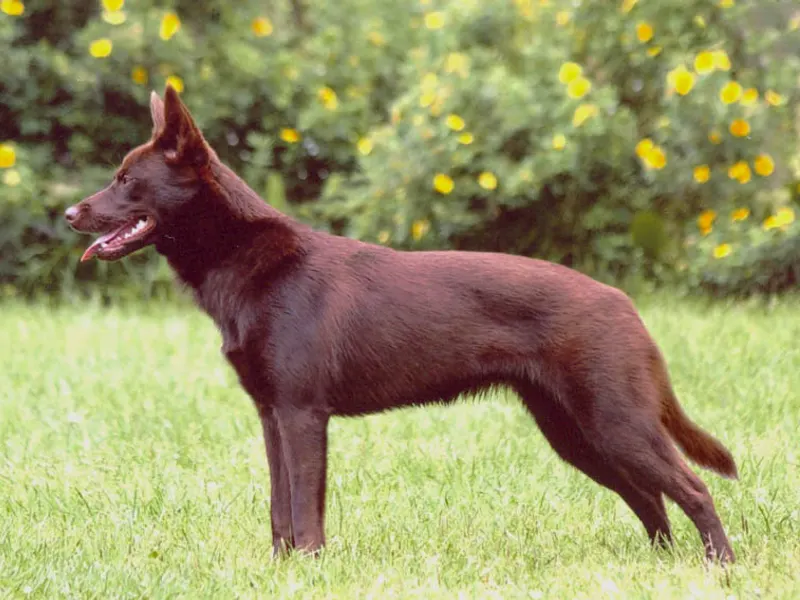
Scottish Collie-type dogs brought to Australia in the 19th century form the foundation of the Australian Kelpie, developed by Australian sheep station owners who needed a dog capable of handling large mobs of sheep across the country's brutal heat and vast distances, conditions the original imported Collies weren't fully suited for. The breed became famous for its distinctive habit of running along the backs of tightly packed sheep to move faster through a mob, a technique still occasionally seen in working demonstrations today. The Kelpie remains overwhelmingly a working breed in Australia even now, valued on ranches worldwide for genuinely exceptional herding ability, though it's recognized by the AKC through Foundation Stock Service rather than full status. The breed's name is popularly traced to a dog named Kelpie owned by rancher Jack Gleeson in the 1870s, whose exceptional working ability reportedly made her name become shorthand for the entire type, though breed historians note the exact naming history involves some genuine uncertainty and competing accounts. Australian sheep stations still rely on working Kelpies today in numbers that dwarf the breed's presence as a companion dog internationally, and Australian working-dog trials remain the breed's primary proving ground.
Common health predispositions
- Hip dysplasia
- Progressive retinal atrophy
- Cerebellar abiotrophy
Temperament
Extremely high energy and near-obsessive herding drive define the Australian Kelpie — this is a breed that needs a job, and without livestock or a substantial working substitute, that drive doesn't simply switch off, it redirects, often toward chasing cars, bicycles, or anything else that moves. Kelpies are highly intelligent and independent problem-solvers, capable of working sheep with minimal direction, which makes them extraordinary working partners but a genuine handful for an owner expecting a casual companion dog.
Living with a Australian Kelpie
Without livestock access, Kelpies generally need a serious substitute — structured herding sport, extended running, intensive dog-sport training — to feel genuinely satisfied, and 90 minutes is closer to a baseline than a ceiling for this breed's exercise needs. Coat care stays simple by comparison: the short double coat sheds moderately and needs only regular brushing. Hip dysplasia, progressive retinal atrophy, and cerebellar abiotrophy, a neurological coordination disorder, are documented concerns, and given the breed's sheer intensity, most working-line Kelpies are a poor fit for sedentary suburban life without a serious activity plan. This breed suits a genuinely active individual or family, ideally with access to real acreage or serious dog-sport outlets like agility or herding trials — it's a poor fit for anyone without the time and space for a breed this driven. As a companion dog outside working ranch contexts, the Kelpie's US population stays small enough that dedicated rescue is genuinely uncommon; herding-breed rescue networks and direct contact with import-focused breeders are the more realistic paths to finding one.
FAQ
Are Australian Kelpies good pets for a normal household?
Only for a genuinely active one willing to provide serious daily exercise and mental engagement — this is an extremely high-drive working breed, and without livestock or an equivalent outlet, that energy tends to redirect into chasing cars, bikes, or anything else that moves.
How is a Kelpie different from a Border Collie?
Both are exceptional herding breeds with intense drive, but the Kelpie was developed specifically for Australia's harsh heat and vast distances, giving it somewhat more heat tolerance and stamina for open-range work, while the Border Collie's style tends toward closer, more intensive eye-contact herding.
Do Kelpies really run across sheep's backs?
Yes — it's a genuine, documented working technique the breed uses to move quickly across a tightly packed mob of sheep rather than going around them, occasionally still demonstrated at working dog trials in Australia.
Where does the name "Kelpie" come from?
Popular accounts trace it to a particularly skilled working dog named Kelpie owned by rancher Jack Gleeson in the 1870s, whose reputation reportedly made her name become shorthand for the whole breed, though breed historians note some genuine uncertainty in the exact naming history.
Are Kelpies still used as working dogs in Australia today?
Extensively — Australian sheep stations rely on working Kelpies in numbers that far outweigh the breed's presence as a companion dog internationally, and Australian herding trials remain the breed's primary proving ground and the source of most serious breeding programs.
Is the Australian Kelpie AKC recognized?
Not yet in the full sense — the AKC lists the Kelpie only in its Foundation Stock Service for breeds still building toward full recognition, reflecting how the breed remains overwhelmingly a working stock dog bred and evaluated by Australian sheep and cattle producers for herding ability rather than one shaped primarily for conformation showing.
Related on FetchBreed
Lists this breed appears in
Whichever breed fits your life, consider adoption or breed-specific rescue first — many purebred and mixed-breed dogs and cats are already waiting for homes.
General breed information, not veterinary advice — consult a vet for your pet's specific health, diet, and behavior needs.