Herding Group
Australian Cattle Dog
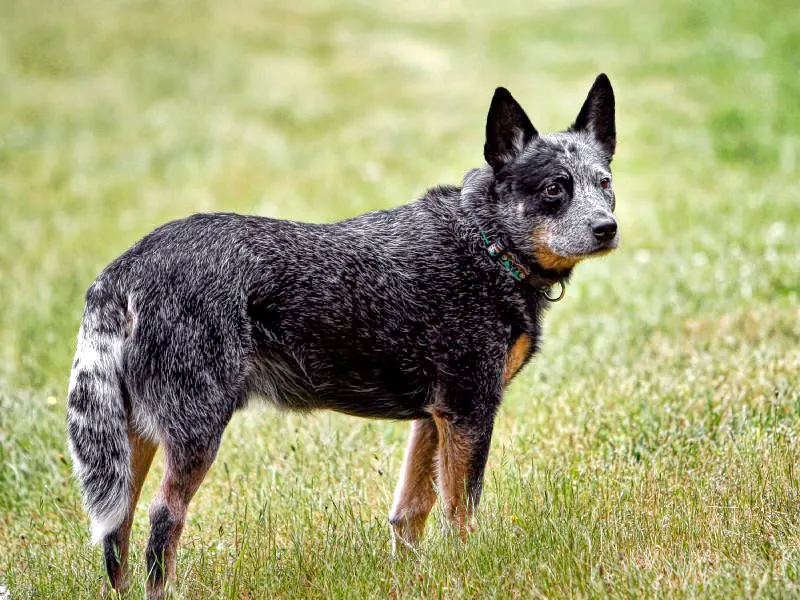
Australian ranchers developed the Australian Cattle Dog in the 1800s to herd cattle across the country's vast, harsh outback terrain, crossing Collie-type herding dogs with the Dingo, Australia's native wild dog, to produce a breed with the stamina, heat tolerance, and toughness needed to work cattle over enormous distances that European herding breeds weren't suited for — the Dingo ancestry is still visible in the breed's distinctive blue or red speckled coat and wedge-shaped head. The AKC recognized the breed in 1980, comparatively recent given its 19th-century working origins, and 'Bluey,' a Queensland Heeler who reportedly lived nearly 30 years, holds the widely cited record for the oldest documented dog, though the claim predates modern verification standards and is treated with some caution by canine longevity researchers today. Regardless of that specific record's certainty, the breed is generally understood by vets and breed clubs to run on the longer-lived end for a medium working breed, consistent with its typical documented lifespan of 12-16 years.
Common health predispositions
- Hip dysplasia
- Progressive retinal atrophy
- Deafness
Temperament
Australian Cattle Dogs carry maxed-out energy and trainability, a working intensity that rivals or exceeds the Border Collie's, reflected in a breed that genuinely needs a job or serious structured activity to stay behaviorally sound. The breed's heel-driving herding instinct is powerful and without deliberate training it commonly shows up as nipping at running children, joggers, or other pets — the below-average kids-and-pets scores here are an honest read on that working intensity, not a suggestion the breed is aggressive by nature.
Living with a Australian Cattle Dog
Ninety minutes of genuinely vigorous exercise is close to a minimum for this breed, and Australian Cattle Dogs are notorious among trainers for developing serious destructive or obsessive behaviors when under-stimulated — this is not a casual companion breed. Grooming is minimal for the short, dense double coat. Hip dysplasia and a documented predisposition to progressive retinal atrophy round out the main health concerns, and deafness, linked to the same piebald/merle-adjacent genetics responsible for the breed's speckled coat pattern, occurs at a notably elevated rate compared with dogs generally, making BAER hearing testing of puppies a standard practice among responsible breeders. The breed's two coat colors, blue and red, are purely cosmetic variations with no documented health or temperament difference, and 'Queensland Heeler' remains a common informal alternate name for the breed, reflecting its strong regional Australian origin. A related breed, the Australian Stumpy Tail Cattle Dog, developed from similar foundation stock but is recognized as a genetically distinct breed with a naturally short or absent tail, less common outside Australia.
FAQ
Why are Australian Cattle Dogs prone to deafness?
The breed's speckled coat pattern is linked to genetics associated with pigment distribution that can also affect inner-ear cell development, similar to the pattern seen in some other spotted or merle breeds, producing an elevated documented deafness rate; reputable breeders BAER-test puppies' hearing before sale specifically because of this association.
Is an Australian Cattle Dog part Dingo?
Yes, genuinely — 19th-century Australian breeders deliberately crossed Collie-type herding dogs with the native Dingo to produce a breed tough and heat-tolerant enough for outback cattle work, and that ancestry remains visible in the breed's wedge-shaped head and speckled coloring.
Are Australian Cattle Dogs good first dogs?
Generally not the best pick for a novice — this breed's punishing energy level and working drive really do call for an owner who can deliver serious daily physical and mental outlets, and skimping on either tends to produce a dog with significant destructive or obsessive tendencies.
How much exercise does an Australian Cattle Dog need?
A very high amount — around 90 minutes of genuinely vigorous daily activity is typical, among the highest of any popular breed, and the dog does far better with an actual job or structured working-dog sport than with casual exercise alone.
Is 'Queensland Heeler' another name for the Australian Cattle Dog?
Yes — it's a common informal alternate name for the breed, reflecting its strong regional Australian working origin herding cattle by nipping at their heels, and it's used interchangeably with 'Australian Cattle Dog' in much of Australia and among some American owners.
Is the Australian Stumpy Tail Cattle Dog the same breed?
No — while it shares similar foundation stock and a similar working role, the Stumpy Tail is recognized as a genetically distinct breed defined partly by its naturally short or absent tail, and it remains considerably less common and less internationally recognized than the standard Australian Cattle Dog.
Related on FetchBreed
Comparisons
- Australian Cattle Dog vs Australian Shepherd
- Australian Cattle Dog vs Basset Hound
- Australian Cattle Dog vs Belgian Malinois
- Australian Cattle Dog vs Border Collie
- Australian Cattle Dog vs Brittany
- Australian Cattle Dog vs Bulldog
- Australian Cattle Dog vs Collie
- Australian Cattle Dog vs English Springer Spaniel
- Australian Cattle Dog vs German Shepherd Dog
- Australian Cattle Dog vs Pembroke Welsh Corgi
- Australian Cattle Dog vs Samoyed
- Australian Cattle Dog vs Shetland Sheepdog
Lists this breed appears in
Whichever breed fits your life, consider adoption or breed-specific rescue first — many purebred and mixed-breed dogs and cats are already waiting for homes.
General breed information, not veterinary advice — consult a vet for your pet's specific health, diet, and behavior needs.