Non-Sporting Group
Shiba Inu
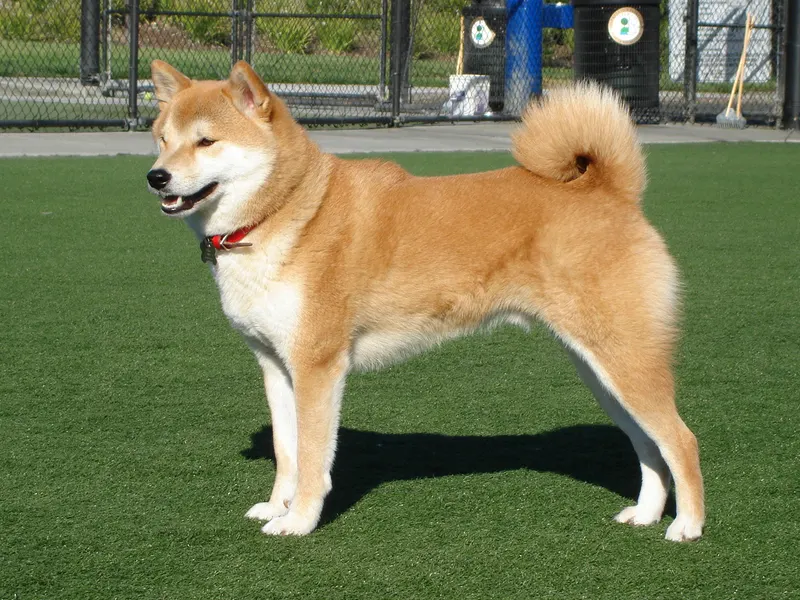
The Shiba Inu is one of Japan's oldest and smallest native dog breeds, developed in mountainous terrain to flush and hunt small game like birds and rabbits, and it's believed to be one of the ancestral spitz-type breeds that contributed to several other Japanese dog breeds over time. The breed nearly went extinct during and after World War II due to wartime food shortages, distemper outbreaks, and bombing, and the modern population was rebuilt from just three surviving bloodlines in the postwar decades — a genetic bottleneck comparable in scale to the Vizsla's. Japan recognizes the breed as a natural monument, and the AKC only granted full recognition in 1992, comparatively recent for a breed with such an ancient lineage — a reflection of how long it took to rebuild a stable, internationally exportable population after the wartime near-extinction.
Common health predispositions
- Luxating patella
- Hip dysplasia
- Allergies
Temperament
Shiba Inus carry a famously independent, almost cat-like temperament — bold, alert, and notably less biddable than most popular Western breeds, which is why trainability ratings for the breed run only moderate despite genuine intelligence. Owners often describe the 'Shiba scream,' a distinctive, unmistakable vocalization the breed produces when startled, frustrated, or resistant to something, and its scores for living with young kids and other pets land squarely in the moderate range rather than high, a fair reflection of a dog that values its own space more than most companion breeds do.
Living with a Shiba Inu
A daily 45-minute activity window generally covers this breed's physical needs, though Shiba Inus are notorious escape artists and accomplished jumpers, making genuinely secure fencing more important than the breed's compact size might suggest. Don't be fooled by how short the coat looks, either — it's a dense double layer underneath that sheds heavily and demands regular brushing, especially during the seasonal blowout. Luxating patella, hip dysplasia, and allergies are documented health concerns in the breed, and because of the breed's independent streak and comparatively lower trainability, Shiba Inus are frequently recommended for owners with prior dog experience rather than as a first dog, despite the breed's popularity and appealing looks online. The breed's coat comes in red, black-and-tan, and sesame patterns, all requiring similar grooming, and unlike many small companion breeds the Shiba Inu is not considered a natural watchdog breed despite its alertness — it's more likely to size up an unfamiliar situation independently than to reliably alert its owner. Shiba Inus are also famously fastidious self-groomers, often compared to cats in that respect, and generally require less bathing than most double-coated breeds as a result. A smaller variety, the Mame Shiba, is sometimes marketed by breeders as a miniature version, but it's not a recognized separate breed or size class — just smaller individual dogs within normal genetic variation, not a deliberately bred toy variant. The breed's curled tail and pricked, triangular ears are both classic spitz-type traits shared with several other Japanese breeds descended from the same general ancestral stock, including the larger Akita.
FAQ
What is the 'Shiba scream'?
A distinctive, high-pitched vocalization the breed is known for producing when startled, frustrated, or resisting something it doesn't want to do, like a nail trim or bath — it's a real and well-documented breed trait, loud enough that it's become something of an internet phenomenon, and not a sign of injury on its own.
Are Shiba Inus good first dogs?
Not typically recommended — the breed's genuine independence, moderate trainability, and strong-willed nature make it more demanding to train and manage than its small size and popular online image suggest, and it's more often recommended for owners with some prior dog experience.
Why do Shiba Inus escape so often?
The breed is an unusually skilled jumper and digger for its size, a trait tied to its history as an independent hunting dog in mountainous terrain, and secure, tall fencing (including buried wire in some cases) is standard advice for Shiba Inu owners despite the breed's compact build.
How close did the Shiba Inu come to extinction?
Very close — wartime food shortages, distemper outbreaks, and bombing during and after World War II devastated the breed's population in Japan, and the modern Shiba Inu is rebuilt from just three surviving regional bloodlines, a genetic bottleneck breed historians and geneticists still study today.
When was the Shiba Inu recognized by the AKC?
1992 — relatively recent given the breed's ancient lineage, reflecting how long it took after World War II's near-extinction event for a stable, internationally exportable Shiba Inu population to be rebuilt from the surviving bloodlines.
Is the Shiba Inu related to the larger Akita?
Yes — both are native Japanese spitz breeds descended from ancient hunting dogs used in mountainous regions of Japan, but the Shiba Inu was bred specifically for smaller game like birds and rabbits in dense brush, which shaped its noticeably smaller size, while the Akita's larger prey targets shaped its considerably bigger, sturdier frame.
Related on FetchBreed
Comparisons
- Shiba Inu vs Bichon Frise
- Shiba Inu vs Boston Terrier
- Shiba Inu vs Bulldog
- Shiba Inu vs Chihuahua
- Shiba Inu vs French Bulldog
- Shiba Inu vs Maltese
- Shiba Inu vs Miniature Schnauzer
- Shiba Inu vs Pomeranian
- Shiba Inu vs Shetland Sheepdog
- Shiba Inu vs Shih Tzu
- Shiba Inu vs Siberian Husky
- Shiba Inu vs Standard Poodle
Lists this breed appears in
Care equipment for a Shiba Inu
As an Amazon Associate we earn from qualifying purchases made through these links, at no extra cost to you.
- De-shedding tool
The page warns not to be fooled by how short the coat looks — a dense double layer underneath sheds heavily through the seasonal blowout. It also notes Shibas need less bathing than most double-coated breeds, so there is no shampoo here.
Whichever breed fits your life, consider adoption or breed-specific rescue first — many purebred and mixed-breed dogs and cats are already waiting for homes.
General breed information, not veterinary advice — consult a vet for your pet's specific health, diet, and behavior needs.