Hound Group
Norwegian Elkhound
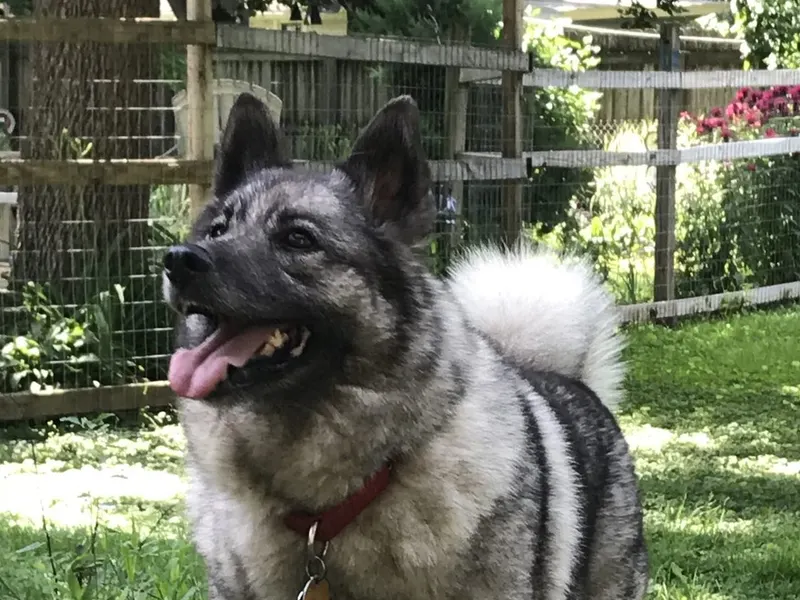
Archaeological finds of dogs closely resembling the modern Norwegian Elkhound date back to Viking-era Scandinavia and possibly earlier, making this one of the older northern breeds with documented ancient roots, developed originally to track and hold elk — the European name for moose — at bay through persistent barking until a hunter could arrive, rather than to physically bring the animal down itself. Beyond the hunting field, Norwegian farms put the breed to work herding livestock and guarding property too, and today it's widely regarded as Norway's national dog. The AKC recognized the breed in 1913, and its confident bark-and-hold hunting style, distinct from scent-trailing hounds that work mostly silently, remains a defining behavioral trait of the breed today.
Common health predispositions
- Hip dysplasia
- Progressive retinal atrophy
- Elkhound-associated renal disease
Temperament
That bark-and-hold hunting heritage shows up clearly in the modern Norwegian Elkhound's temperament and vocalization level, which runs high compared with most Nordic breeds — this is a dog bred specifically to make noise as part of its job, and it retains a genuine tendency to alert-bark at anything novel. Kids tend to do well with this breed, and loyalty to family runs deep, though the farm-guardian side of its history also gives it a watchful, sometimes reserved streak with strangers. Training goes reasonably well but rarely automatically, since like many older northern breeds this one was built to work with real autonomy rather than under a handler's constant close direction.
Living with a Norwegian Elkhound
Centuries spent covering ground in demanding Norwegian terrain left this breed with genuine working stamina, and an hour of vigorous exercise daily is what it takes to satisfy that inheritance. Brushing needs to happen often: the thick, silver-gray double coat sheds steadily all year and then lets go dramatically during the twice-yearly seasonal transitions. Hip dysplasia, progressive retinal atrophy, and a form of kidney disease specifically documented and tracked in Elkhound lines, sometimes called Elkhound-associated renal disease, are the main health concerns worth discussing with a breeder. Because of the breed's genuinely high vocalization tendency, households sensitive to barking should weigh this trait carefully, since it's a deeply bred-in working behavior rather than something training alone easily eliminates. Despite its northern heritage, the Norwegian Elkhound adapts reasonably well to a range of climates as long as its substantial exercise needs are met, and the breed remains an active, capable presence in AKC obedience and tracking events that give its working instincts a legitimate modern outlet.
FAQ
What was the Norwegian Elkhound originally bred to hunt?
Elk — the European name for moose — using a distinctive bark-and-hold hunting style, tracking and cornering the animal while barking persistently to hold it in place until a hunter could arrive, rather than physically bringing the animal down itself.
Why do Norwegian Elkhounds bark so much?
It's a genuine, deliberately bred-in trait connected directly to the breed's bark-and-hold hunting style, distinct from scent-trailing hounds that typically work in near-silence — the Elkhound's job has always involved making noise, and that tendency carries over strongly into the modern pet dog.
How much does a Norwegian Elkhound shed?
A lot — this is not a breed for anyone who dislikes vacuuming, and the twice-yearly coat change in particular calls for daily brushing sessions just to keep pace with the volume of loose undercoat coming out.
Is the Norwegian Elkhound Norway's national dog?
Yes, it's widely regarded as such, reflecting the breed's ancient roots in Scandinavia and its long history as both a hunting dog and an all-purpose Norwegian farm dog.
What is Elkhound-associated renal disease?
A form of inherited kidney disease specifically documented and tracked in Norwegian Elkhound lines, distinct enough from general canine kidney disease that researchers study it as its own breed-specific condition — it's worth asking any breeder directly whether it appears in their dogs' family history.
How big does a Norwegian Elkhound get?
Medium — typically 48 to 55 pounds and around 20 inches at the shoulder, a compact but sturdy build suited to covering demanding terrain while tracking and holding large game like elk.
Are Norwegian Elkhounds good with children?
Loyalty and affection toward its own family come naturally to this breed, though its vocal, alert nature and moderate independence mean training around excessive barking matters more here than with quieter breeds.
How long do Norwegian Elkhounds live?
Twelve to 15 years is typical for a medium breed of this kind, longer for dogs whose owners stay attentive to the documented hip and kidney health risks tracked in the breed over a lifetime.
Is a Norwegian Elkhound a good first dog?
A loyal, trainable temperament makes this breed more approachable than many independent northern breeds, provided the new owner has genuinely braced for the vocal tendency and heavy shedding that come with it.
Do Norwegian Elkhounds get along with other dogs?
A reasonably sociable streak comes from the breed's cooperative farm-dog history, and most Elkhounds settle fine into a multi-dog household once introductions are handled with a bit of patience.
What does a Norwegian Elkhound's coat look like?
Thick, silver-gray, and weatherproof, with distinctive black tipping on the outer guard hairs — a genuinely striking coat pattern that's part of what makes the breed instantly recognizable among northern spitz-type dogs.
Is the Norwegian Elkhound good for apartment living?
Rarely ideal — the breed's high vocalization tendency and substantial exercise needs are genuinely difficult to satisfy in a small space, making a home with more room and a yard a better practical fit.
What is the Norwegian Elkhound's role in Norwegian culture?
Beyond its ancient hunting role, the breed holds a genuine cultural status as Norway's national dog, referenced in Norse legend and archaeological finds dating back to the Viking era and possibly earlier.
Related on FetchBreed
Lists this breed appears in
Whichever breed fits your life, consider adoption or breed-specific rescue first — many purebred and mixed-breed dogs and cats are already waiting for homes.
General breed information, not veterinary advice — consult a vet for your pet's specific health, diet, and behavior needs.