Foundation Stock Group
Kishu Ken
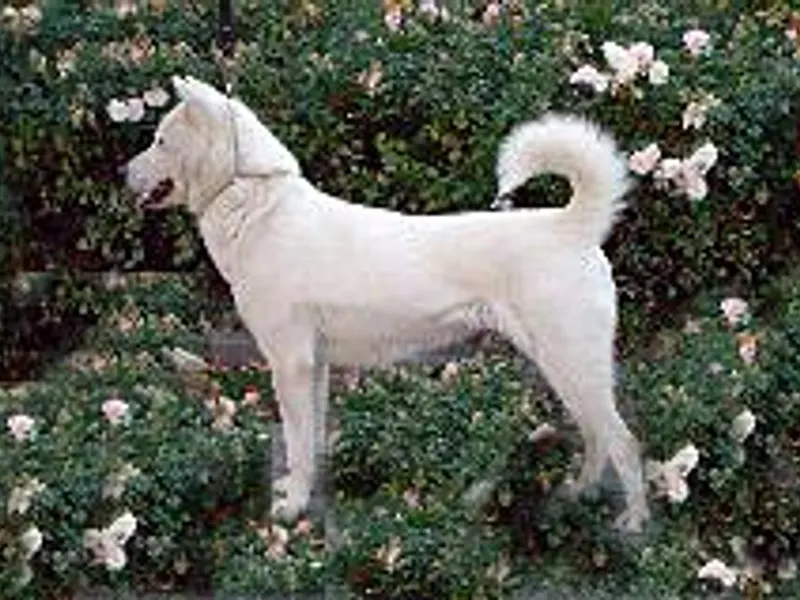
Hunters in Japan's Kishu region, in what's now Wakayama and Mie prefectures, developed this breed over centuries specifically to hunt wild boar, a genuinely demanding job that shaped both the Kishu Ken's tenacious working temperament and its distinctively compact, powerful build. While the breed standard technically allows several coat colors, breeders and hunters overwhelmingly favor and select for solid white individuals today, a preference that developed partly because a white dog stays clearly visible to hunters during fast-moving boar hunts through dense brush. Along with several other native spitz-type breeds, the Kishu Ken picked up formal natural-monument status from the Japanese government during the 1930s, a national heritage designation that shielded its population and relative genetic purity through the disruptive decades that followed. Rural Japanese hunters still send this breed after boar today, and its recent, limited US arrival means it has yet to register with anyone outside a small circle already following Japan's native breeds.
Common health predispositions
- Generally healthy primitive breed
- Hip dysplasia (uncommon)
- Allergies
Temperament
Bold and genuinely tenacious, the Kishu Ken carries real boar-hunting courage in a compact, muscular frame, a working intensity that shows up as fearlessness in the field and real confidence at home. Devotion to its own family runs deep, though most individuals stay genuinely reserved around strangers and other dogs — breeders selected for that wariness right alongside the hunting instinct rather than trying to breed it out. That same boldness means the Kishu Ken isn't a breed that backs down easily from a confrontation, and early, deliberate socialization matters considerably for managing real intensity around unfamiliar dogs. Japanese hunting and breed preservation societies continue actively working the Kishu Ken in its original boar-hunting role in rural areas, treating that ongoing working use as central to keeping the breed's genuine natural-monument character intact.
Living with a Kishu Ken
This is a genuinely powerful working breed that wants a full hour of real activity, ideally including some scent-work or field-style outlet for its actual hunting drive. The short, dense white coat needs only regular, not intensive, brushing to stay in good condition. Widely considered a hardy primitive breed, the Kishu Ken's main health items worth a direct breeder conversation are hip dysplasia, though uncommon, and a genuine tendency toward skin allergies in some individuals. Confident to the point of occasional confrontation with strangers and other dogs, this breed asks for an experienced handler who can manage that boldness rather than a first-time owner learning as they go. Only a small handful of dedicated domestic breeders work with the breed at all, so US buyers should expect to reach out directly, sometimes going straight to Japanese sources when domestic litters aren't available. Ongoing costs stay reasonable given the coat's low maintenance and the breed's overall toughness — the real hurdle here is locating a puppy in the first place.
FAQ
Why are most Kishu Kens white?
The breed standard technically allows several coat colors, but breeders and hunters have overwhelmingly favored solid white individuals for generations, partly because a white dog stays clearly visible to hunters during fast-moving wild boar hunts through dense brush.
What was the Kishu Ken bred to hunt?
Wild boar specifically — hunters in Japan's Kishu region, now Wakayama and Mie prefectures, developed the breed over centuries for this genuinely demanding job, which shaped both its tenacious temperament and its compact, powerful build.
Is the Kishu Ken a natural monument?
Yes — this breed and several other native spitz types all received Japan's formal natural-monument designation during the 1930s, protection that carried its population and genetic purity through the turbulent decades that followed.
Is a Kishu Ken good with other dogs?
Often genuinely reserved or even confrontational — real wariness toward unfamiliar dogs was bred deliberately alongside the breed's boar-hunting courage, so early, consistent socialization matters considerably for managing that intensity.
Is the Kishu Ken still used for hunting in Japan?
Yes, genuinely — rural hunters in parts of Japan still work the breed against boar today, and preservation societies point to that continued field use as key to keeping its natural character from fading into a purely show-ring type.
How big does a Kishu Ken get?
Weight typically runs 30 to 60 pounds with a shoulder height around 17 to 22 inches, a deep chest and dense muscle packed onto a compact frame giving it the physical toughness needed to hold a cornered boar at bay until hunters caught up.
Is the Kishu Ken related to the Shiba Inu?
Only distantly — both descend from Japan's broader family of native spitz-type hunting dogs, but they developed independently in different regions for different quarry, the Shiba primarily for smaller game in lower terrain and the Kishu Ken specifically for wild boar across Wakayama and Mie's mountainous interior.
Related on FetchBreed
Lists this breed appears in
Whichever breed fits your life, consider adoption or breed-specific rescue first — many purebred and mixed-breed dogs and cats are already waiting for homes.
General breed information, not veterinary advice — consult a vet for your pet's specific health, diet, and behavior needs.