Hound Group
Hamiltonstovare
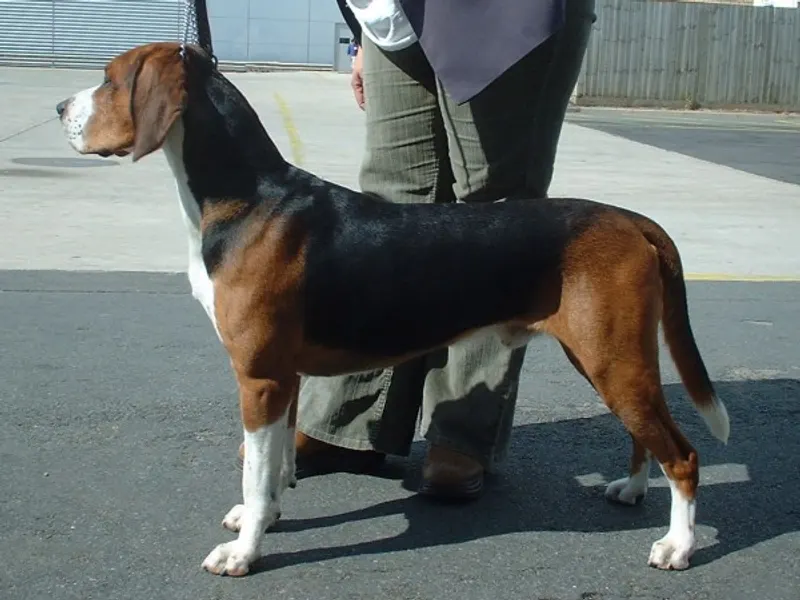
Count Adolf Patrick Hamilton, a founding figure of the Swedish Kennel Club in the late 19th century, developed this breed specifically by crossing German and English scenthound lines to produce a versatile Swedish hunting dog capable of tracking fox and hare across the country's varied, often harsh terrain, and the breed carries his name directly as a result. That deliberate cross-national breeding approach — pulling in German precision-scenting lines alongside English hound stamina — reflects a genuinely methodical, almost scientific approach to breed development unusual for the era, consistent with Count Hamilton's broader role establishing organized, standards-based dog breeding in Sweden more generally. The Hamiltonstövare's tricolor coat pattern, resembling an English Foxhound at first glance, has led to some historical confusion among casual observers, though the breed's actual working style and temperament differ in real ways shaped by its specific Swedish hunting purpose. Sweden's harsh winters and rugged forest terrain demanded genuine cold tolerance and stamina from the breed, qualities bred deliberately into the Hamiltonstövare from its earliest development. The breed remains Sweden's most popular hunting dog today by some measures, even as it stays genuinely obscure in the US, where American recognition has stalled at Foundation Stock Service standing rather than a fully recognized group.
Common health predispositions
- Hip dysplasia
- Ear infections
- Generally hardy
Temperament
Blending German scenting precision with English hound stamina by design, the Hamiltonstövare comes across as notably composed for a working scenthound, carrying itself with a calm, well-rounded confidence rather than high-strung intensity. It settles into an active household easily, showing genuine warmth toward its own people once the day's exercise is behind it. Consistent structure pays off unusually well with this breed too — a legacy, perhaps, of a founder who approached dog breeding with something close to scientific rigor rather than casual selection. Swedish hunters still actively use the Hamiltonstövare for fox and hare hunting today, and Swedish field trials continue to test and reward exactly the calm, methodical working style Count Hamilton originally bred for.
Living with a Hamiltonstovare
Open field one day, dense forest the next — this breed's working background across varied Swedish terrain means 75 minutes of genuine daily activity works best when the setting actually changes rather than staying the same loop every day. Coat care sits at the easy end of the spectrum: the short, dense tricolor coat needs only occasional brushing. The available veterinary sources describe a genuinely hardy breed overall, a product of practical working-dog development rather than cosmetic show breeding, though hip screening and routine ear checks still belong on any responsible checklist. Real outdoor access, cold-weather tolerance, and an appreciation for a calm, versatile Scandinavian hunting breed — that's the household profile that suits a Hamiltonstövare best. American breeders working with this specific breed are close to nonexistent, and nearly every interested owner ends up importing a puppy directly from Sweden or elsewhere in Scandinavia. Ongoing costs run about what you'd expect for a mid-sized hound, but getting a puppy here at all is the real hurdle, not the monthly budget.
FAQ
How is the Hamiltonstövare different from an English Foxhound?
Despite the visually similar tricolor coats, the two work differently: English Foxhounds traditionally hunt in coordinated packs at a sustained gallop, while the Hamiltonstövare was bred to hunt alone or in a small group at a more moderate, methodical pace suited to Sweden's dense forest terrain rather than open countryside. The Hamiltonstövare is also generally considered calmer and more even-tempered indoors than the typically higher-energy, pack-oriented English Foxhound.
Is the Hamiltonstövare the same as an English Foxhound?
No — a superficially similar tricolor coat has led to some casual confusion, but the two breeds developed independently in different countries, and the Hamiltonstövare's working style and temperament reflect its specific Swedish hunting purpose rather than an English one.
Is the Hamiltonstövare popular in Sweden?
Yes, genuinely — it remains Sweden's most popular hunting dog by some measures, a stark contrast to the US, where the AKC has yet to grant it status beyond its Foundation Stock Service listing.
How much exercise does a Hamiltonstövare need?
Plan on roughly 75 real minutes a day, and vary the terrain if possible — this breed's working background covered everything from open field to dense forest, and it genuinely benefits from that same variety today.
Can you get a Hamiltonstövare puppy in the United States?
It's genuinely difficult — dedicated US breeders are close to nonexistent, so most interested owners would need to source a puppy from Sweden or elsewhere in Scandinavia directly and arrange the import themselves.
Where does the Hamiltonstovare's name come from?
The breed is named for Adolf Patrick Hamilton, founder of the Swedish Kennel Club, who developed it in the late 19th century by crossing several German and Swiss scenthound lines to produce a hardy tricolor hound suited to Sweden's harsh winters and dense forest terrain, and 'stovare' is simply the Swedish word for scenthound.
Related on FetchBreed
Lists this breed appears in
Whichever breed fits your life, consider adoption or breed-specific rescue first — many purebred and mixed-breed dogs and cats are already waiting for homes.
General breed information, not veterinary advice — consult a vet for your pet's specific health, diet, and behavior needs.