Hound Group
Grand Basset Griffon Vendéen
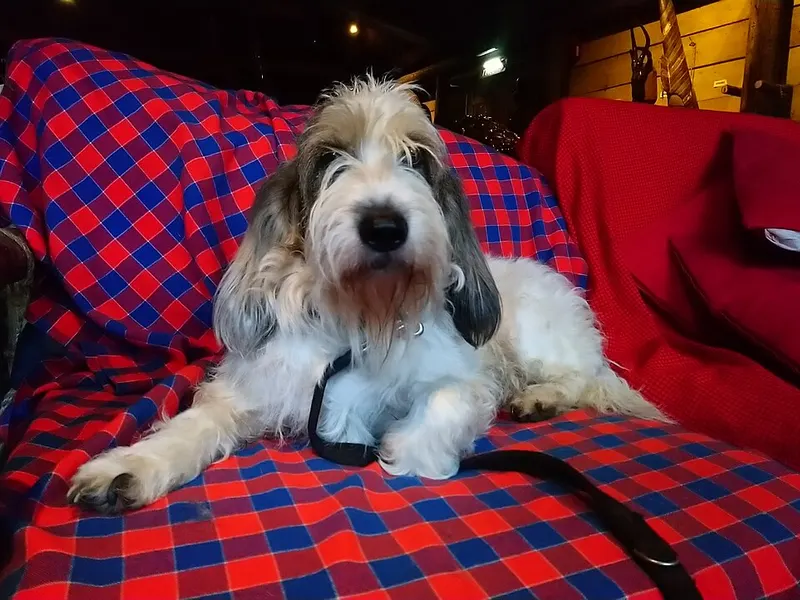
Roe deer and wild boar, not rabbit, were this breed's traditional quarry — a distinction that separates the Grand Basset Griffon Vendéen from its shorter, more compact PBGV cousin, whose job was working dense undergrowth for smaller game rather than covering the more open ground larger animals require. Both descend from the same once more variable regional Vendéen hound stock, formally split into two standards during the 20th century, and both still carry the rough, wiry double coat and general temperament that mark them as close relatives despite the size gap between them, a relationship well documented in French hunting-breed records. French hunters traditionally worked the Grand Basset Griffon Vendéen in organized packs pursuing larger game across genuinely demanding terrain, a working style that shaped both the breed's real stamina and its comfort working cooperatively alongside other hounds. The breed remains considerably less common in the US than its smaller PBGV cousin, which achieved broader American recognition and popularity somewhat earlier, leaving the Grand variety a genuinely specialized choice mostly sought out by dedicated hound enthusiasts familiar with the distinction between the two related breeds.
Common health predispositions
- Patellar luxation
- Hip dysplasia
- Ear infections
Temperament
Pack work shaped this breed's whole social wiring — a Grand Basset Griffon Vendéen kept alongside other dogs tends to settle in with real ease, a legacy of the organized group hunts it was bred for. Confidence and real energy come standard too, along with an unmistakably cheerful streak that shows up as tail-wagging enthusiasm for pretty much any activity involving people or other dogs. Kids generally fare well around this breed, though a nose this good comes with a corresponding tendency to tune out a handler's calls once something interesting has been picked up on a trail.
Living with a Grand Basset Griffon Vendéen
Covering more demanding terrain than its Petit cousin was ever asked to takes a genuinely fuller exercise routine here — count on 60 real minutes daily at minimum, with fencing solid enough to actually hold this breed rather than merely discourage it. Keeping the rough, wiry double coat's protective texture right calls for regular brushing between periodic hand-strip appointments. Chronic ear infections round out a health picture where patellar luxation and hip screening are the two main items on a responsible breeder's checklist. Real outdoor space, genuine tolerance for scent-driven independence, and ideally a canine housemate given this breed's pack-oriented sociability — that's the household where a Grand Basset Griffon Vendéen genuinely flourishes. French hunting clubs still maintain working packs of the breed today, and that continued working use is part of why the Grand has kept more of its original stamina and drive than some other AKC hound breeds whose modern populations trace almost entirely to show lines. This specific variety stays considerably harder to find in the US than its smaller cousin, so dedicated rescue essentially doesn't exist, and interested owners typically go straight to one of the small number of breeders working specifically with the Grand rather than the Petit line. Hand-stripping appointments are the notable recurring cost that separates this breed's monthly budget from a similarly sized smooth-coated hound.
FAQ
Which came first, the Grand or the Petit Basset Griffon Vendéen?
Both trace back to a once more variable regional Vendéen hound type before French breeders formally split them into two standards in the 20th century, so neither breed strictly predates the other — they diverged from a shared starting point rather than one being derived from the other.
Is the Grand Basset Griffon Vendéen good with other dogs?
Generally yes — a history hunting in organized packs pursuing large game across demanding terrain left the breed genuinely comfortable working and living alongside other dogs.
How much grooming does a Grand Basset Griffon Vendéen need?
A regular commitment — the rough, wiry double coat needs consistent brushing plus an occasional professional hand-strip to keep its protective texture and shape intact.
Is the Grand Basset Griffon Vendéen common in the US?
Not especially — it remains considerably less common than its smaller PBGV cousin, which achieved broader American recognition earlier, leaving the Grand variety a specialized choice mostly sought out by dedicated hound enthusiasts.
Is a Grand Basset Griffon Vendéen easy to recall off-leash?
Not particularly — real scent-hound independence means the breed follows an interesting trail with genuine conviction, so secure fencing is a far more reliable approach than counting on off-leash recall.
How does the Grand Basset Griffon Vendeen differ from the Petit Basset Griffon Vendeen?
Despite the closely related name and shared French Vendeen origin, the Grand is a substantially different breed rather than simply a larger version of the Petit, with its own AKC standard, and it stands taller, at roughly 15.5-18 inches versus the Petit's 13-15 inch standard, with a longer, less compact body built for a different pace of scent-trailing work.
Related on FetchBreed
Lists this breed appears in
Whichever breed fits your life, consider adoption or breed-specific rescue first — many purebred and mixed-breed dogs and cats are already waiting for homes.
General breed information, not veterinary advice — consult a vet for your pet's specific health, diet, and behavior needs.