Foundation Stock Group
Catahoula Leopard Dog
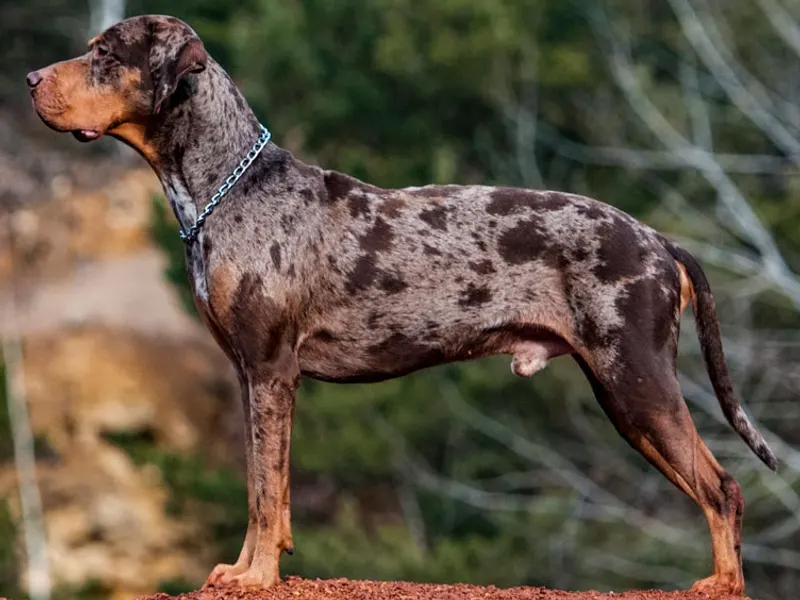
Louisiana's swamps and forests shaped the Catahoula Leopard Dog, a breed with genuinely uncertain but colorful origins tracing to a mix of dogs brought by Spanish explorers, French settlers, and possibly Native American dogs already present in the region, crossbred over generations into a distinctive hog- and cattle-herding dog suited to the area's difficult terrain. Named for Louisiana's Catahoula Parish, the breed became the state's official dog in 1979 and functioned almost entirely as a working farm and hunting dog for most of its history, with the striking merle-patterned coat and often mismatched or pale eyes emerging as a genetic hallmark rather than a deliberately bred cosmetic feature. The breed's most persistent origin theory involves Spanish explorer Hernando de Soto's expedition through Louisiana in the 1540s, whose war dogs are said to have interbred with dogs already kept by the local Choctaw and other Native American groups, though like much of the Catahoula's early history this remains more oral tradition than documented fact. Louisiana's designation of the breed as the state dog in 1979 helped formalize and celebrate a type that had otherwise developed almost entirely outside any organized breed-club system.
Common health predispositions
- Deafness (linked to merle/glass-eye genetics)
- Hip dysplasia
- Sun sensitivity in pink-skinned individuals
Temperament
High drive and independent problem-solving define the Catahoula's working temperament — this is a breed bred to herd cattle and hogs largely on its own judgment in dense terrain, and that self-directed intelligence carries directly into the modern dog as a strong-willed, sometimes stubborn companion that needs a confident handler. Loyalty to family runs deep, and most individuals are protective without being reflexively aggressive, but the breed's intensity and prey drive mean small pets and unfamiliar animals require careful management. The breed's traditional use hunting and driving semi-wild hogs through Louisiana's swamps demanded a dog willing to confront large, dangerous animals independently, and that same fearlessness shows up in the modern Catahoula as genuine confidence that can tip into stubbornness without an owner establishing clear leadership early on.
Living with a Catahoula Leopard Dog
Ninety minutes of vigorous daily exercise reflects the genuine working intensity bred into this breed — a Catahoula that doesn't get real physical and mental outlets tends to become destructive or difficult, a common complaint among owners who underestimate the breed's drive. Coat care stays simple thanks to the short single or double coat, needing only occasional brushing. One genuinely important breed-specific health note: the merle coat pattern and associated glass or pale eyes carry an elevated risk of congenital deafness, particularly in double-merle breeding, so asking a breeder about hearing testing and the specific genetics behind a litter matters here more than with most breeds. Hip dysplasia and sun sensitivity in lighter-skinned individuals round out documented concerns. A strong-willed working dog like this one needs an experienced, active owner genuinely committed to training — a first-time owner, or a household lacking secure fencing and daily physical outlets, is a poor match. Catahoula-specific rescue exists mainly in the South where the breed is most common, and Catahoula-type mixes turn up often enough in regional shelters that adopters have reasonable options.
FAQ
Why do some Catahoula Leopard Dogs have different colored eyes?
The merle gene responsible for the breed's distinctive coat pattern also affects eye pigment, which is why many Catahoulas have pale, blue, or mismatched eyes — a genuinely linked trait rather than a coincidence.
Are Catahoula Leopard Dogs deaf often?
The merle genetics behind the breed's coat carry an elevated deafness risk, particularly when two merle dogs are bred together, so responsible breeders test hearing and avoid double-merle pairings.
Is the Catahoula Leopard Dog a good family pet?
It can be with an experienced, active family, but the breed's high working drive and independent temperament make it a demanding choice for households looking for a laid-back companion rather than a genuine working partner.
Is the Catahoula Leopard Dog related to Spanish explorers' dogs?
One persistent origin story connects the breed to war dogs brought by Hernando de Soto's 1540s expedition through Louisiana, which supposedly interbred with dogs already kept by local Native American groups — a colorful account, though more oral tradition than documented historical fact.
Is the Catahoula Leopard Dog AKC recognized?
Not with full recognition — it's recognized by the United Kennel Club, and the AKC lists it through its Foundation Stock Service program rather than granting it full breed status.
Is the Catahoula Leopard Dog good for a first-time dog owner?
Generally not recommended — the breed's high working drive, independent decision-making instincts, and strong prey drive call for handling experience that a first-time owner typically hasn't yet developed, and inconsistent training can produce a genuinely difficult adult dog.
Related on FetchBreed
Lists this breed appears in
Whichever breed fits your life, consider adoption or breed-specific rescue first — many purebred and mixed-breed dogs and cats are already waiting for homes.
General breed information, not veterinary advice — consult a vet for your pet's specific health, diet, and behavior needs.