Foundation Stock Group
Carolina Dog
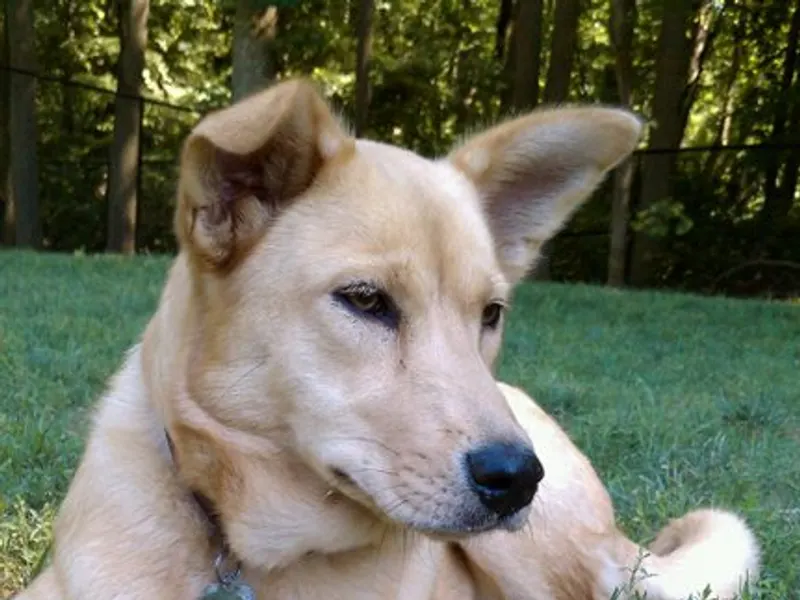
Wildlife biologist I. Lehr Brisbin first identified free-roaming dogs in the remote swamps and forests of South Carolina in the 1970s as a genuinely distinct, ancient landrace type — dogs that appeared to have descended largely unchanged from early dogs that arrived with the first humans crossing into North America thousands of years ago, surviving in relative isolation in the region's backcountry. DNA studies since have supported the idea that Carolina Dogs carry genuinely old lineage compared to most modern breeds, closer to primitive dog types found in parts of Asia than to any deliberately bred European breed. The United Kennel Club recognized the Carolina Dog in 1996; it remains rare and is not AKC recognized. Beyond South Carolina, similar free-roaming landrace dogs matching the Carolina Dog's general type have been documented in remote parts of several other Southeastern states, suggesting the population wasn't strictly confined to the specific swamps Brisbin originally studied. Genetic comparisons have drawn interesting, if inconclusive, parallels between the Carolina Dog and other primitive landrace breeds worldwide, including Australia's Dingo and various Southeast Asian village-dog populations, fueling ongoing academic interest in the breed's deep ancestry.
Common health predispositions
- Hip dysplasia (occasional)
- Generally hardy with few documented breed-specific conditions
Temperament
As a landrace breed shaped by natural selection rather than deliberate human breeding for temperament, Carolina Dogs tend to be alert, cautious around strangers, and notably pack-oriented, behaviors that echo how the breed likely survived for generations as a semi-wild population. Consistent socialization starting in puppyhood tends to produce a dog that's reliably affectionate and closely bonded within its own household, though the breed's inherent wariness toward unfamiliar people and situations never fully disappears the way it might in a breed bred for centuries purely as a companion. Unlike breeds shaped by generations of selective breeding for a specific temperament, the Carolina Dog's personality reflects whatever traits actually helped a dog survive as a free-roaming animal, which means individual dogs can vary meaningfully in sociability and independence even within the same litter, more so than in a tightly standardized purebred.
Living with a Carolina Dog
Sixty minutes of daily activity suits this athletic, medium-sized breed well, and Carolina Dogs generally do best with a securely fenced yard given their instinct to roam and investigate, a genuine holdover from their free-ranging ancestry. The short, dense double coat needs only occasional brushing. As a landrace breed shaped mostly by natural rather than artificial selection, Carolina Dogs are generally quite hardy, with few well-documented breed-specific health conditions beyond occasional hip dysplasia, though because the breed is uncommon and not standardized the way most AKC breeds are, individual health can vary more than with a tightly bred purebred line. This breed suits an owner drawn specifically to a more independent, semi-wild temperament and willing to put in real, patient socialization work — it's a poor fit for someone wanting an immediately affectionate, biddable companion dog. Because the breed remains uncommon and not tightly bred to a narrow standard, most Carolina Dogs available for adoption come through general Southeastern shelters rather than dedicated breed rescue, and shelter staff don't always correctly identify them by breed.
FAQ
Is the Carolina Dog really an ancient breed?
Genetic research has found the Carolina Dog carries notably old lineage compared to most modern breeds, supporting the theory that it descends largely unchanged from early dogs that arrived in North America with the first human migrations, though this remains an area of ongoing scientific study rather than settled fact.
Are Carolina Dogs good pets?
With consistent early socialization, many become loyal, affectionate companions, but their landrace background gives them a naturally more cautious, independent temperament than a breed selected for generations purely as a companion, which suits some households better than others.
Do Carolina Dogs need a fenced yard?
Strongly recommended — the breed's free-ranging ancestry left behind a real instinct to roam and investigate, and a securely fenced space matters more here than with most companion breeds.
Are Carolina Dogs related to Dingoes?
Genetic comparisons have drawn interesting, though not definitively conclusive, parallels between the Carolina Dog and other primitive landrace populations worldwide including Australia's Dingo, based on shared ancient lineage markers rather than any direct historical connection between the two continents.
Where can you find a Carolina Dog for adoption?
Most commonly through general shelters in the Southeastern US rather than dedicated breed rescue, since the breed remains uncommon and shelter staff don't always correctly identify a Carolina-type dog by breed on intake.
Do Carolina Dogs make good watchdogs?
Reasonably so — the breed's naturally cautious, alert temperament toward unfamiliar people and situations, a holdover from its landrace survival background, translates fairly naturally into a dog that notices and reacts to anything out of the ordinary around the home.
Related on FetchBreed
Lists this breed appears in
Whichever breed fits your life, consider adoption or breed-specific rescue first — many purebred and mixed-breed dogs and cats are already waiting for homes.
General breed information, not veterinary advice — consult a vet for your pet's specific health, diet, and behavior needs.