Working Group
Akita
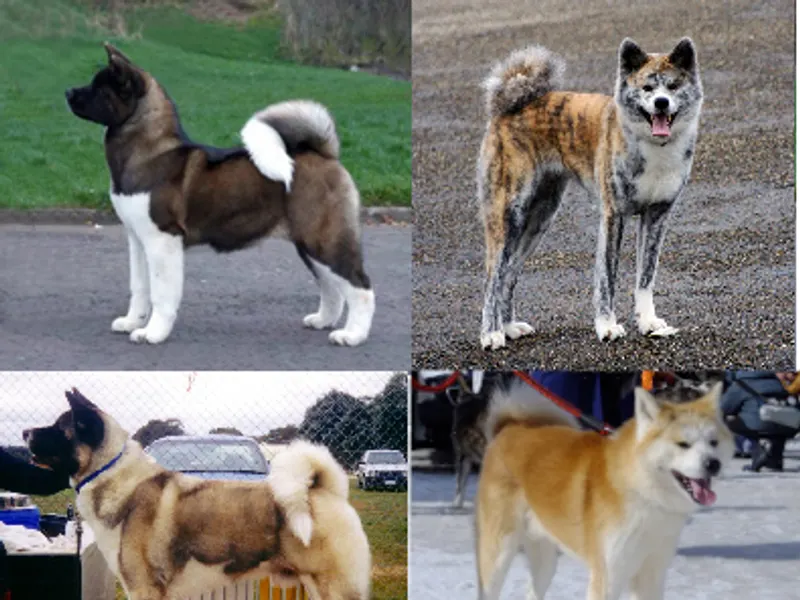
The Akita developed in the mountainous Akita Prefecture of northern Japan, originally as a large hunting dog used for boar, deer, and even bear, later valued as a guardian and, famously, as a symbol of loyalty following the story of Hachikō, an Akita who continued waiting at a Tokyo train station for his deceased owner's return every day for nearly a decade in the 1920s-30s — a story that made the breed a national symbol of fidelity in Japan and remains commemorated with a statue at Shibuya Station today. Japan designates the Akita a natural monument, and there are actually two distinct types recognized internationally — the American Akita, larger and available in a wider range of colors including markings, and the Akita Inu (or Japanese Akita), which the FCI treats as a separate breed with a narrower, fox-like head and restricted coat colors closer to the original Japanese standard.
Common health predispositions
- Hip dysplasia
- Hypothyroidism
- Progressive retinal atrophy
Temperament
Akitas are dignified, independent, and famously reserved with strangers, a temperament closer to a large guarding breed than to the more universally friendly retrievers — its kid-compatibility rating sits only in the middle of the pack and its other-pets score runs low, an honest signal that this isn't a casual, plug-and-play household breed. Akitas often show same-sex aggression toward other dogs, a well-documented breed tendency traceable to their historical use as solitary guardians and hunters rather than pack animals, and they bond intensely with their own family while remaining watchful, sometimes standoffish, with outsiders.
Living with a Akita
An hour of daily activity is a reasonable target for the Akita, and don't let the short-looking coat fool you on grooming — underneath it is a thick double coat that sheds heavily, blows out hard twice a year, and needs regular brushing to keep up with. Hip dysplasia, hypothyroidism, and an inherited progressive retinal atrophy all appear in the breed's documented health record, and the breed's size and strength mean early, consistent training and socialization are genuinely important rather than optional. Because the breed sheds so heavily, a strong vacuum and a regular de-shedding routine become close to a household necessity rather than an occasional chore during blowout season. Housing law is a real practical wrinkle for this breed specifically: a number of municipalities and rental or insurance policies name the Akita directly among restricted dogs on account of its size and guarding history, so that's worth confirming locally before falling in love with a puppy.
FAQ
Are Akitas good with other dogs?
Often not, particularly toward dogs of the same sex — dog-directed aggression is a documented, recurring pattern in the breed, tracing back to a history of solitary hunting and guarding rather than pack living, and it's exactly why professional-guided socialization starting in puppyhood matters more here than with most breeds.
Who was Hachikō and why is the Akita associated with loyalty?
Hachikō was a real Akita in 1920s-30s Tokyo who continued walking to Shibuya Station to wait for his owner, a professor who had died at work, for almost ten years after the owner's death — the story became a national symbol of loyalty in Japan and is commemorated with a bronze statue at the station that remains a popular landmark today.
Are Akitas banned anywhere?
Some cities, housing complexes, and insurance companies do restrict or exclude Akitas as part of broader breed-specific policies targeting large guarding-type breeds, so checking local regulations and insurance terms before committing to the breed is genuinely worthwhile, not just a formality.
How much grooming does an Akita need?
More than the short-looking coat suggests — underneath is a thick double coat that sheds heavily and blows out twice a year in dramatic fashion, and only frequent brushing sessions keep the loose undercoat, and the household shedding it causes, under any real control.
Is the American Akita the same as the Japanese Akita Inu?
Internationally, no — most kennel clubs outside the U.S. and Canada treat them as two separate breeds, with the Japanese Akita Inu kept closer to a narrower head shape and a more restricted color range than the larger, more varied American Akita, though the AKC still classifies them together as a single breed.
Is the Akita restricted in any cities?
In some places, yes — the breed shows up by name on a number of municipal restricted-breed lists and rental or insurance policies because of its size and guarding history, which is worth a quick local check before getting attached to a specific puppy.
Are Japanese Akita and American Akita considered the same breed?
Not anymore in most of the world — the FCI and many international kennel clubs split them into two separate breeds in the 1990s due to diverging type after World War II, though the AKC still registers them together as one breed with two acceptable types, a difference worth knowing before assuming standards match internationally.
Related on FetchBreed
Comparisons
Lists this breed appears in
Care equipment for a Akita
As an Amazon Associate we earn from qualifying purchases made through these links, at no extra cost to you.
- Pet-hair vacuum
Named on the page itself: a strong vacuum and a regular de-shedding routine become close to a household necessity during blowout season.
- De-shedding tool
The other half of that same sentence — the coat looks short but sheds heavily from a dense undercoat underneath.
Whichever breed fits your life, consider adoption or breed-specific rescue first — many purebred and mixed-breed dogs and cats are already waiting for homes.
General breed information, not veterinary advice — consult a vet for your pet's specific health, diet, and behavior needs.